|
Life in Charente is so relaxing, comfortable and enjoyable that a number of years ago we realised that despite coming here consistently since 2014, we hadn’t really seen that much of France. People often asked us if we had been to "such and such" a place, or seen another part, and we would have to say “no, not yet”. It was just so easy to stay in and enjoy the local area. Since then, we have made a commitment to go and see some new areas each time we visit. We have spent some substantial periods in Paris, and visited parts of Auvergne, Aveyron, Bas-Rhin, Gard, Vaucluse, Manche and Ille-et-Vilaine, Vendée and Charente-Maritime. One of our favourite areas is the Dordogne which is the department directly to the south of us in Charente, and therefore quite easy to get to.
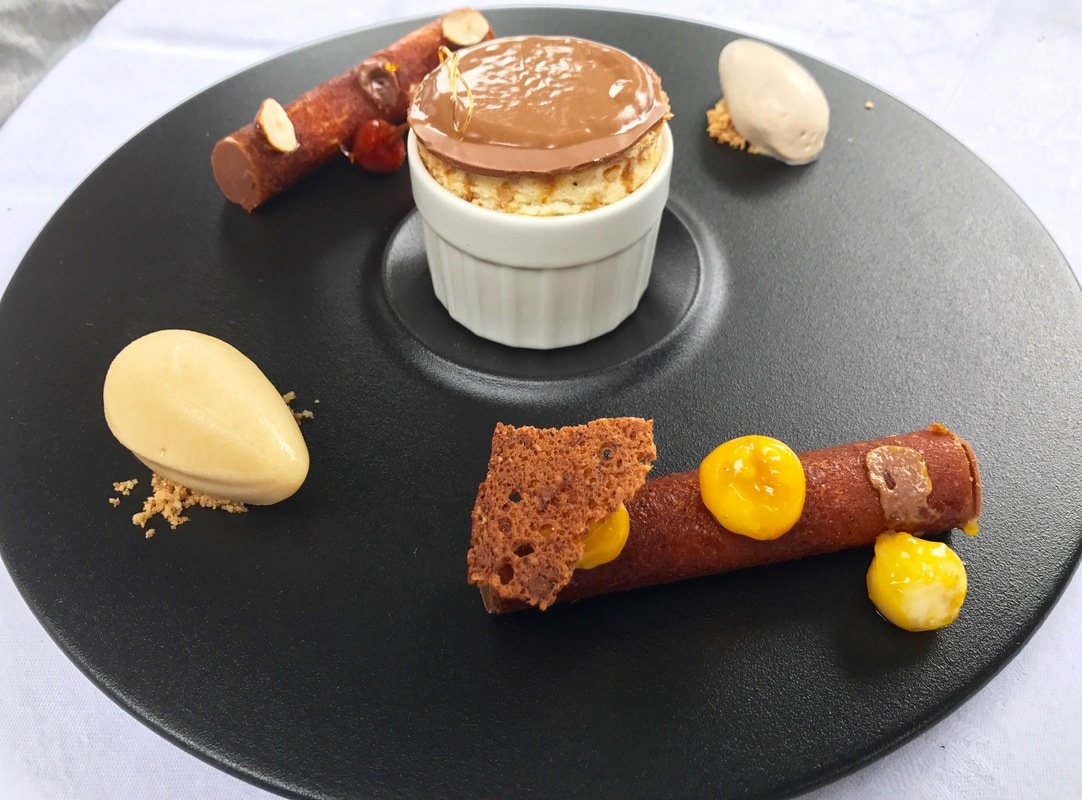
We’ve been to the Périgord area of Dordogne quite a few times and often feel compelled to revisit. We headed down just before the high season, in June, and while there were lots of people around, it wasn’t “crazy-busy”, and we were surprised at the lack of English-speaking tourists. All the visitors and holiday makers seemed to be French.  Our road-trip from Verteuil to the Dordogne, and back. We notice that as soon as you cross the border from Charente to the Dordogne the gently undulating land and fields of grain, hay, rape seed, corn and sunflowers is left behind, and transitions to a much more hilly landscape covered by more forest. We have left the wind turbines behind, and notice that the villages and towns seem more plucked and coiffed. The stone houses and buildings have changed from the grey-white Angoulemois stone to the yellow-ocre coloured stone of the Dordogne river cliffs. Our first stop, as usual, is Brantôme. Brantôme, a beautiful riverside village on the Dronne river in the north of the department of the Dordogne. It is always on our list of places to visit and we have been many times - it never fails to impress. The town has a beautiful mixture of medieval and renaissance architecture to admire. The Benedictine abbey on the banks of the river is superb and the old stone bridge and the beautiful mill have been transformed into a hotel and restaurant. The abbey was originally built by Charlemagne in 769 and there is a troglodytic section behind the abbey built into the cliffs. There are plenty of places to eat, and for special occasions, spoil yourself and make a reservation at the restaurant, Le Moulin de L'Abbeye, a Michelin star restaurant. We have previously enjoyed two great meals on the mill terrace with attentive service and food that is a visual treat, all the while watching the ducks and ducklings on the river, and the canoes riding down the chuttes of the weir, on their way down the river. After a walk around the Friday morning markets, a coffee by the river and a quick look at the various galleries in the old converted abbey, we left Brantôme for Lascaux. Lascaux IV which is a fabulous reproduction of the nearby 20,000 year old cave art that was stumbled upon by a group of boys and their dog in 1940. We visited Lascaux II in 2014. Lascaux IV is entered through an amazing concrete structure – the French do Visitor Centres very well. This is truly worth a visit, especially for fans of “The Clan of the cave Bear” series! The large life size depictions of bison, cows and horses on the walls and roof of these caves are inspiring.
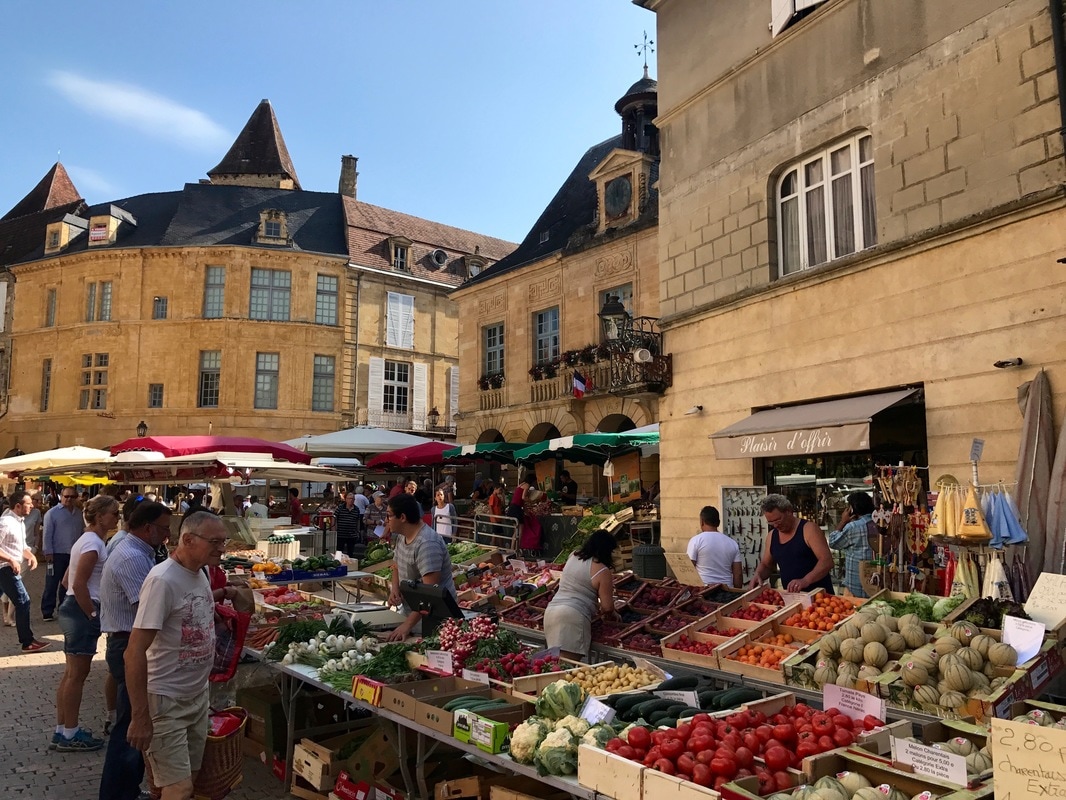
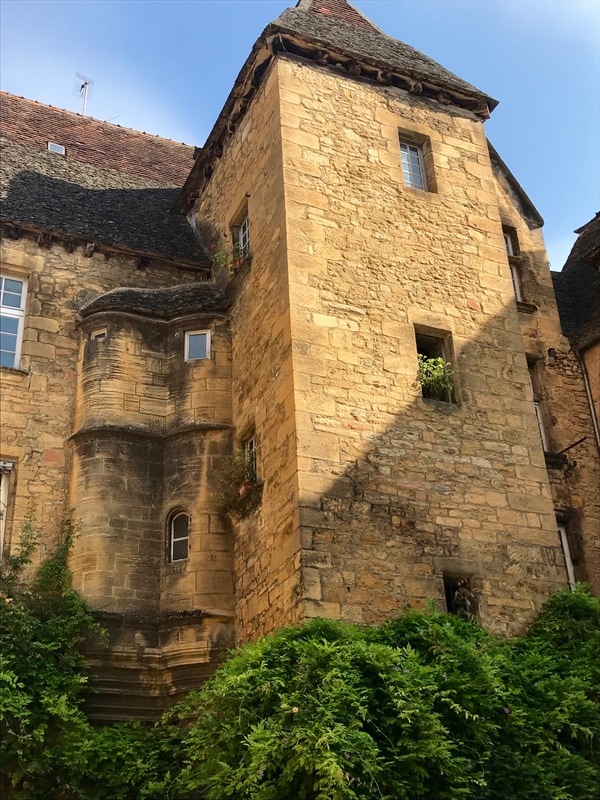
1994) was based in Paris but had a close attachment to, and frequently visited, the area. I remember having a large poster of Robert Doisneau’s Le Baiser de l’Hôtel de Ville on my wall in my student days. Sarlat-la-Canéda is a must-visit town. The market town of Sarlat is reknown for its foie gras - you'll see images of ducks and geese everywhere! It's a special, lovely old town, and the spring-board for this "special" region of France. It has been relatively untouched in recent centuries and as a result, Sarlat has remained preserved and one of the towns most representative of 14th century France. Try to arrange your visit to include Saturday, as it has a fantastic, busy market on Saturdays mornings. I am going to shamelessly recommend the little B&B that we stayed in – Noreli B&B – on the old town square, just 4 rooms, huge spaces, above a restaurant, friendly staff, and very reasonably priced. Sarlat is a great base to see the rest of the Dordogne River valley. Across a couple of days we visited some lovely chateaux and some other places which are worth highlighting. The Dordogne is scattered with ancient châteaux. There is not a place along the Dordogne River valley that you cannot see at least a couple of châteaux, many built on the cliffs of the river or on some other prominent high area, during the Middle Ages. While the towers and turrets of châteaux in Charente tend to be topped by conical slate tile roofs, those in the Dordogne are typically topped by pyramidal lauze stone roofs. The Château de Beynac is one of the best-preserved and best known in the region. At the time of the Hundred Years’ War, the fortress at Beynac was in French hands. The Dordogne was the border between France and England. Not far away, on the opposite bank of the river, the Château de Castelnaud was held by the English. The Dordogne region was the theatre of numerous struggles for influence, rivalries and occasionally battles between the English and French supporters.
collection of weapons, armour and reconstructions of siege engines and trebuchets.
in the Resistance during WWII. The story of the adjacent chapel in the grounds is also interesting as it describes the efforts of the current owners of the château in the process of restoring it, and how they worked with archaeologists, universities and the community to understand its history.
Domme is a little town that is well worth a visit and offers beautiful views up and down the Dordogne valley and river. It lies high on a rocky outcrop overlooking the Dordogne river and is a bastide, or fortified medieval town. Today, Domme is a member of the association Les Plus Beaux Villages de France ("The Most Beautiful Villages of France"). Domme was founded in 1281 and has a turbulent history. In 1307, the Knight Templars were imprisoned in Domme during the trial against them. During the Hundred Years' War, the bastide was coveted by the English who first took the town in 1347 and repeatedly changed rulers throughout the war until 1437 when it finally fell under French rule again. The Wars of Religion brought new turmoil. Protestants took the town in 1588 by climbing the cliffs at night to open the gates. Apparently this was a short success, as the Protestants handed the bastide back to the Catholics in 1592. Domme is a great town to wander around, take in the views and do some shopping in the artisan shops. Fun fact: On the subject of road trips, I read an article recently that it is often claimed that there are as many roundabouts in France as in the rest of the world! Approximately five roundabouts are constructed every day in France [The Local France: Inside France, 6 June 2026].
0 Comments
Leave a Reply. |
AuthorJim lives in Brisbane, Australia, worked at The University of Queensland until 2025, and enjoys visiting, reading and learning about France. 
Archives
June 2026
Categories |







 RSS Feed
